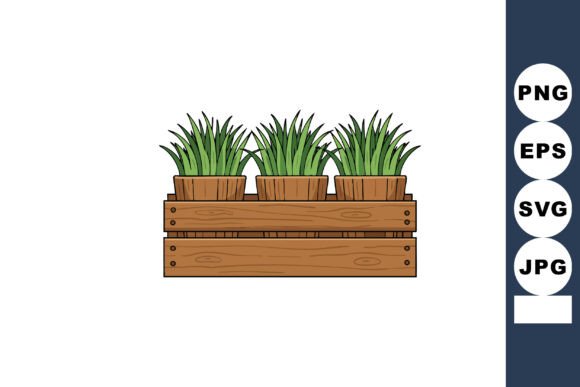
Decorative Green Grass Plants in Wooden: A Design Asset Guide
There is a specific kind of visual calm that comes from bringing nature into design, not through a photograph, but through a stylized, enduring illustration. This is the essence of the Decorative Green Grass Plants in Wooden vector illustration. It’s not just a simple image of grass; it’s a carefully composed scene featuring three distinct green grass plants emerging from a brown wooden rectangular box container. The style is clean, simple, and evokes a natural, modern mood. For designers, marketers, and creators, this asset is less about botanical accuracy and more about communicating an immediate sense of organic simplicity and grounded tranquility.
The Visual Personality and Style
Let's break down what makes this particular illustration work. The composition is intentionally minimal. The three grass plants vary slightly in height and form, creating a subtle visual rhythm without overwhelming the space. The wooden container is rendered with a warm, earthy brown tone, its rectangular shape providing a stable, structured base that contrasts with the organic, flowing lines of the grass blades. This juxtaposition is key to its appeal. It feels curated and designed, yet inherently natural. The overall style leans towards a modern illustration aesthetic—flat colors, clean lines, and a focus on shape and silhouette. It avoids unnecessary detail or texture, making it incredibly versatile and scalable. The mood is one of quiet sophistication, perfect for projects that need to convey calm, growth, sustainability, or a connection to the natural world without resorting to clichés.
Strategic Applications Across Creative Projects
The true value of an asset like Decorative Green Grass Plants in Wooden lies in its adaptability. Its simple, clean nature allows it to integrate seamlessly into a wide array of projects, enhancing rather than dominating the overall design. Think of it as a foundational design asset that can be deployed in numerous contexts.
- Branding and Identity: For brands in wellness, eco-friendly products, sustainable living, organic foods, or even minimalist home goods, this illustration can become a core element of the brand identity. It works beautifully as a standalone mark, a supporting graphic on business cards, or a repeating pattern for packaging. Its simplicity ensures it remains recognizable at small scales, a crucial factor for logo design and app icons.
- Digital and Web Design: On websites and blogs, especially those focused on gardening, interior design, mindfulness, or creative coaching, this illustration can serve as a powerful hero image, a section divider, or a custom icon. It adds a touch of warmth and personality that stock photography often lacks. It’s also perfect for social media graphics, providing a consistent visual theme for Instagram stories, Pinterest pins, or LinkedIn banners that need to feel both professional and approachable.
- Print and Editorial: In editorial design, such as magazine layouts, book covers, or report infographics, the illustration can break up text-heavy pages, guide the reader's eye, and reinforce thematic content. For packaging design, particularly for artisanal goods, tea brands, or plant-based products, it offers a handcrafted yet polished aesthetic that communicates quality and care.
- Personal and Craft Projects: The downloadable ZIP file, which includes SVG, EPS, JPG, and PNG formats, makes this asset ideal for crafters and hobbyists. The vector files (SVG, EPS) are perfect for cutting machines like Cricut or Silhouette to create custom decals, stencils, or iron-on transfers for tote bags and t-shirts. The high-resolution JPG and PNG files are ready for print-on-demand projects, greeting cards, or digital planners.
Making It Work: Practical Guidance for Designers and Creators
Integrating any new design asset effectively requires a bit of strategy. Here’s how to get the most out of this particular illustration.
Evaluate Project Fit: Before you even place the file, ask yourself if the illustration's personality aligns with your project's goals. Its simple, natural mood is perfect for conveying calm, growth, and authenticity. If your project demands high-energy, futuristic, or gritty urban vibes, it might not be the right fit. But for anything that needs a touch of organic elegance, it’s a strong candidate.
Consider Scale and Context: Because it’s a vector file, you can scale it to any size without losing quality. This is a major advantage. Use it as a tiny, subtle icon in a footer or blow it up to fill a full-page background in a presentation. Test it in the actual context of your layout. Does it maintain its clarity and impact when placed next to your chosen typography or other visual elements?
Font Pairing and Visual Hierarchy: This is where your role as a designer comes into play. The illustration has a soft, rounded quality. To create a balanced visual hierarchy, consider pairing it with typefaces that either complement or thoughtfully contrast this feel. A clean, geometric sans serif font can enhance its modern side, creating a crisp, contemporary look. A classic, elegant serif font can add a layer of timeless sophistication, making the combination feel more editorial. For a more personal, artisanal touch, a subtle script font or handwritten font could work, but use it sparingly to avoid overwhelming the simplicity of the graphic. The key is to let the illustration and the type support each other, not compete.
Leverage the File Formats: Understand what each file in the ZIP is for. The SVG and EPS files are your editable vectors. Open them in Adobe Illustrator or a similar program to change colors, adjust shapes, or incorporate the elements into a larger custom design. The PNG file likely has a transparent background, making it easy to layer over photos or colored backgrounds in Canva, Photoshop, or even PowerPoint. The JPG is your ready-to-use raster image for quick placements where editing isn't needed.
Think Beyond the Obvious: Don’t just use the illustration as-is. Get creative. Extract just one of the grass plants to use as a standalone element. Create a pattern by repeating and mirroring the entire composition. Use the wooden box as a container for text in a social media post. The simplicity of the asset is its strength, offering a foundation upon which you can build countless variations.
A Final Note on Authenticity and Value
In a digital landscape saturated with generic stock imagery, a thoughtfully crafted vector illustration like Decorative Green Grass Plants in Wooden stands out. It offers a specific, consistent aesthetic that can help build a recognizable brand identity. It’s a practical tool that saves time while elevating the quality of your work. Whether you’re a small business owner building your first website, a marketer creating a campaign, or a crafter personalizing a gift, this asset provides a touch of natural, designed beauty that resonates. It’s a reminder that the most effective design elements are often the simplest, those that capture a feeling and a mood with quiet confidence.